
Kingston, Jamaica – 4 May 2026 – The Area, the seabed and ocean floor beyond national jurisdiction, covers as much as 54 per cent of the ocean. The adoption of the UN Convention on the Law of the Sea (UNCLOS) established a comprehensive legal framework governing ocean space, resources, and activities, and created the International Seabed Authority (ISA) to organize and control activities related to mineral resources in the international seabed area for the benefit of humankind. Further, it is uniquely mandated under UNCLOS to encourage the conduct of marine scientific research and disseminate its results.
Though incredibly vast, decades of marine scientific research largely through ISA Contractors, have significantly advanced our understanding of the deep sea and its remarkable ecosystems. The knowledge that has been generated has both intrinsic scientific value and provides a growing body of the information necessary for decision making about how and when the resources of the deep seabed will be used and how the impacts will be measured and monitored.
In 2020, the Assembly adopted the Action Plan for Marine Scientific Research (MSR Action Plan), establishing a globally endorsed umbrella with six strategic research priorities, anchored in the United Nations Decade of Ocean Science for Sustainable Development.
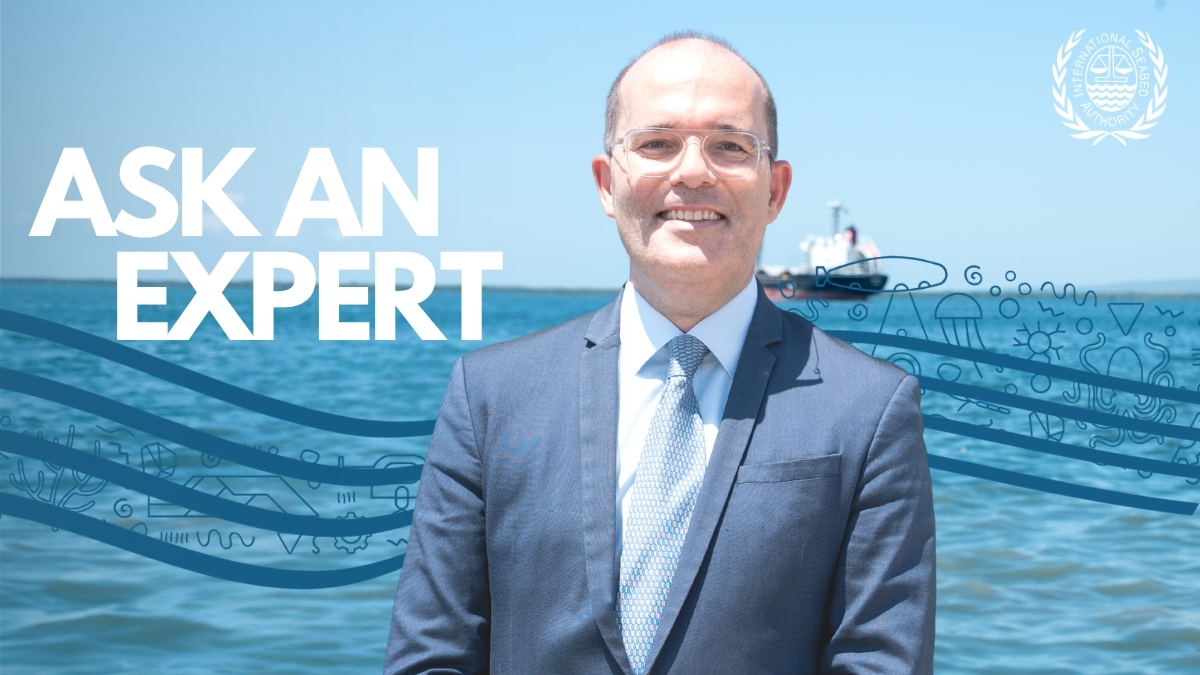
To explore how the Action Plan guides global effort to enhance our understanding of the deep seabed, take stock of the progress achieved, and get a glimpse of what the future will bring, we spoke with José Dallo Moros, Director of the Office of Stewardship, Environment and Resources at ISA.
Could you share the six strategic priorities under the MSR Action Plan and shed light on how ISA promotes the conduct of marine scientific research?
First, the six areas include:
- Advancing scientific knowledge of deep-sea ecosystems;
- Standardizing and innovating methodologies;
- Facilitating technology development;
- Promoting data sharing and access;
- Improving understanding of environmental impacts;
- Building capacity of developing States.
ISA supports the scientific research and international cooperation needed to govern the deep seabed responsibly. Acting as a global catalyst, ISA facilitates expert workshops and commission topic-specific reports that bring together leading expertise and support the development of scientific knowledge and methodologies. Building on these processes, ISA produces a range of knowledge outputs designed to support different audiences and needs. These include technical studies for scientific and legal experts, workshop reports and broader studies to increase the understanding of the wider community, as well as policy briefs for decision-makers and technical highlights on emerging issues. All publications are made publicly available through the ISA website.
Can you elaborate on link of the MSR Action Plan with the science-policy interface?
Sustainable use of our ocean and effective environmental protection requires a solid understanding of the deep-sea including its ecosystems, geology and oceanographic processes. So marine scientific research lies at the heart of the governance framework. At the same time, regulatory progress within the context of ISA also contributes significantly to advancing scientific research. For example, efforts to develop environmental thresholds and Regional Environmental Management Plans rely on robust scientific baseline to assess natural variability, identify mineralogical and/or biodiversity patterns for protection and evaluate potential impacts. These activities are carried out within the framework of the Action Plan, where experts synthesize and review data and scientific literature to support evidence-based decision making. In other words, the MSR Action Plan is key for an effective policy-science interface and effective ocean governance.
Now let’s dive deeper into how the MSR Action Plan guides research efforts today.
First, could you elaborate on why expanding knowledge of deep-sea ecosystems and standardizing and advancing methodologies for biodiversity assessment, as envisaged under the first and second strategic research priorities, respectively, are essential?
Yes, the MSR Action Plan is conceptualized so that each of the six strategic research priorities responds to a specific scientific and governance challenge. First, we need to better understand deep-sea ecosystems by advancing science to ensure solid baselines. A stock taking report published last year illustrated that the scientific output generated through ISA Contractor’s environmental studies led to a total of 22 theses, 66 conference contributions and 431 peer-reviewed scientific publications since the adoption of the MSR Action Plan in 2020. Of course, advancing science is inherently a collective effort and I would like to acknowledge the important contributions of scientists, ISA Contractors and collaborative research programmes that are generating data and insights on the resilience of deep-sea ecosystems. Second, our global efforts in identifying and describing species need to be accelerated. ISA contributes to this herculean endeavor through the Sustainable Seabed Knowledge Initiative. This is a multi-donor, global collaborative platform combining innovation, research and capacity-building in biodiversity assessments that will describe 1,000 species by 2030. For example, its “One Thousand Reasons” campaign projects are on target to describe approximately 100 new species in 2026 alone.
Secondly, advancing technology and assessing impacts are closely intertwined and are addressed under the third and fourth strategic research priority of the MSR Action Plan. Could you shed light on the ongoing activities in these areas?
Indeed, facilitating technology development and innovation responds to the need for more effective observation, monitoring, and investment of the deep ocean. The Secretariat serves as a platform for the dissemination and evaluation of technological developments across five priority domains: ocean observation and communication; monitoring; autonomy, automation, robotics; machine learning and artificial intelligence; and mining, energy, and metal processing. Through annual expert workshops, emerging technologies for exploration are assessed and environmental monitoring accelerated. These efforts ensure that technological innovation effectively supports science-based decision-making in the Area. Additionally, enhancing scientific knowledge and understanding of environmental impacts supports the drafting of an evidence-based regulatory framework. In this context, cumulative impact assessment is a research area of growing scientific and strategic importance, given its relevance for effective marine environmental management and global ocean governance. ISA is developing a dedicated project in this domain, beginning with the commissioning of a comprehensive review of existing methodologies.
Thirdly, how does the ISA promote the dissemination, exchange and sharing of scientific data, as well as deep-sea literacy, and how these efforts undertaken for the benefit of humankind as envisioned by the fifth and sixth strategic research priority of the MSR Action Plan?
We ensure that environmental data collected through exploration expeditions conducted by Contractors can be used globally through the global repository “DeepData”. ISA is the custodian of over 10 terabytes of data stored in DeepData, which represents one of the largest repositories of seabed data in the world and contributes significantly to the management of the Area. The DeepData platform currently hosts close to 800,000 total samples and continues to expand as exploration activities advance and new biological, chemical, physical, and geological measurements are collected. My team ensures the data is searchable, consistent, and quality assured This year the DeepData website and dashboard attracted approximately 96,000 visitors who downloaded over 200 gigabytes of data. Finally, strengthening Authority members’ capacity on deep-sea issues addresses the need for equitable participation and crosscuts our activities to meet our broader strategic research priorities. Training programmes, regional initiatives and mentoring schemes targeting women experts offers scientists from developing States the opportunity to actively engage in deep-sea research.
Together, these initiatives ensure that scientific research contributes directly to the effective protection and sustainable management of the Area.
Could you share your perspective on the future and how the MSR Action Plan is expected to evolve over the next few years?
Drawing on more than 30 years of the Authority’s existence within the wider United Nations system, I am confident that ISA has a solid foundation to navigate the evolving global landscape and identify emerging scientific opportunities in a timely and strategic manner.
We are actively implementing the MSR Action Plan and will support flagship initiatives across scientific domains of global relevance, including those previously mentioned. I would like to highlight two additional examples.
ISA’s Deep-Sea Biobank initiative, developed in partnership with the Republic of Korea to enhance access to deep-sea biological samples and genetic data collected from the international seabed area beyond national jurisdiction, will be further strengthened. It aims to provide global access to over 680,000 biological and geochemical samples. It will also play a key role in supporting the effective implementation of the BBNJ agreement. The second initiative is the ‘Adaptive Observing Programme’ targeting areas of environmental interest in the Clarion Clipperton Zone. This programme will integrate best available technologies and apply machine learning models to optimize data acquisition and refine sampling strategies.
At the same time, research needs at the science–policy interface will be increasingly prioritized. Regulatory processes such as REMPs and environmental thresholds rely on sound science, and the experts advancing these processes undertake in-depth data assessments, data synthesis, and systematic reviews of the latest scientific developments. At the same time, regulatory processes also identify emerging research needs and these will be systematically identified, alongside an analysis of national research agendas to better align scientific with policy priorities.
Furthermore, the Authority will continue to prioritize knowledge exchange and the training of experts from developing States to increase their participation in deep-sea research, with a particular focus on women’s empowerment. In this context, the Authority’s global mentoring programme, “See Her Exceed” (S.H.E.), is entering a new era under the Secretary-General’s leadership. A community of practice for women working on cumulative impacts will be established in the near future.
Looking ahead, achieving this vision will require greater financial investments, expanded scientific expertise, and partnership engagement. I, therefore, warmly invite all stakeholders to engage with the Action Plan by participating in workshops, contributing to knowledge outputs, proposing emerging research topics, mobilizing support within their networks, or providing financial contributions. Only through strengthened collaboration can we ensure that science effectively underpins the stewardship of the deep seabed.
—————————————————————————-
José Dallo is currently Director of the Office of Stewardship, Environment, and Resources at the International Seabed Authority (ISA), bringing extensive experience in sustainable development, environmental governance, and international cooperation. Prior to this role, he served as Senior Officer for Environment and Sustainable Development in the Executive Office of the UN Secretary-General, and earlier established and led UNEP’s Subregional Office for South America.
He has also held senior policy roles within the United Nations system, including as Senior Adviser on Development Policy and Global Partnerships at the UN Development Coordination Office, where he contributed to the core team supporting negotiations of the 2030 Agenda. At UNDP, he worked in the Bureau for Development Policy, coordinating cross-sectoral initiatives on local development, governance, and sustainability.
Before joining the UN, José represented the Spanish Agency for International Development Cooperation (AECID) in Honduras and Uruguay, and served as Deputy Representative in Nicaragua and El Salvador.
Ask an Expert
Ask an Expert is a biweekly Q&A series designed to bridge the gap between the ISA’s complex regulatory work and the global public. The series draws on expertise across five offices of the International Seabed Authority to break down the concept of the common heritage of humankind into clear and accessible insights. Each edition features an expert answering five high-impact questions to transform technical policy and legal debates into real-world examples that illuminate the future of the oceans, green technology and international equity.
About ISA
The International Seabed Authority is an autonomous international organization established under the United Nations Convention on the Law of the Sea. The International Seabed Authority is responsible for regulating mineral-related activities in the international seabed area beyond national jurisdiction. It has a mandate to ensure the effective protection of the marine environment from harmful effects arising from such activities.
For media inquiries, please contact:
ISA Communications Unit, news@isa.org.jm
—————
For more information, visit our website, www.isa.org.jm