
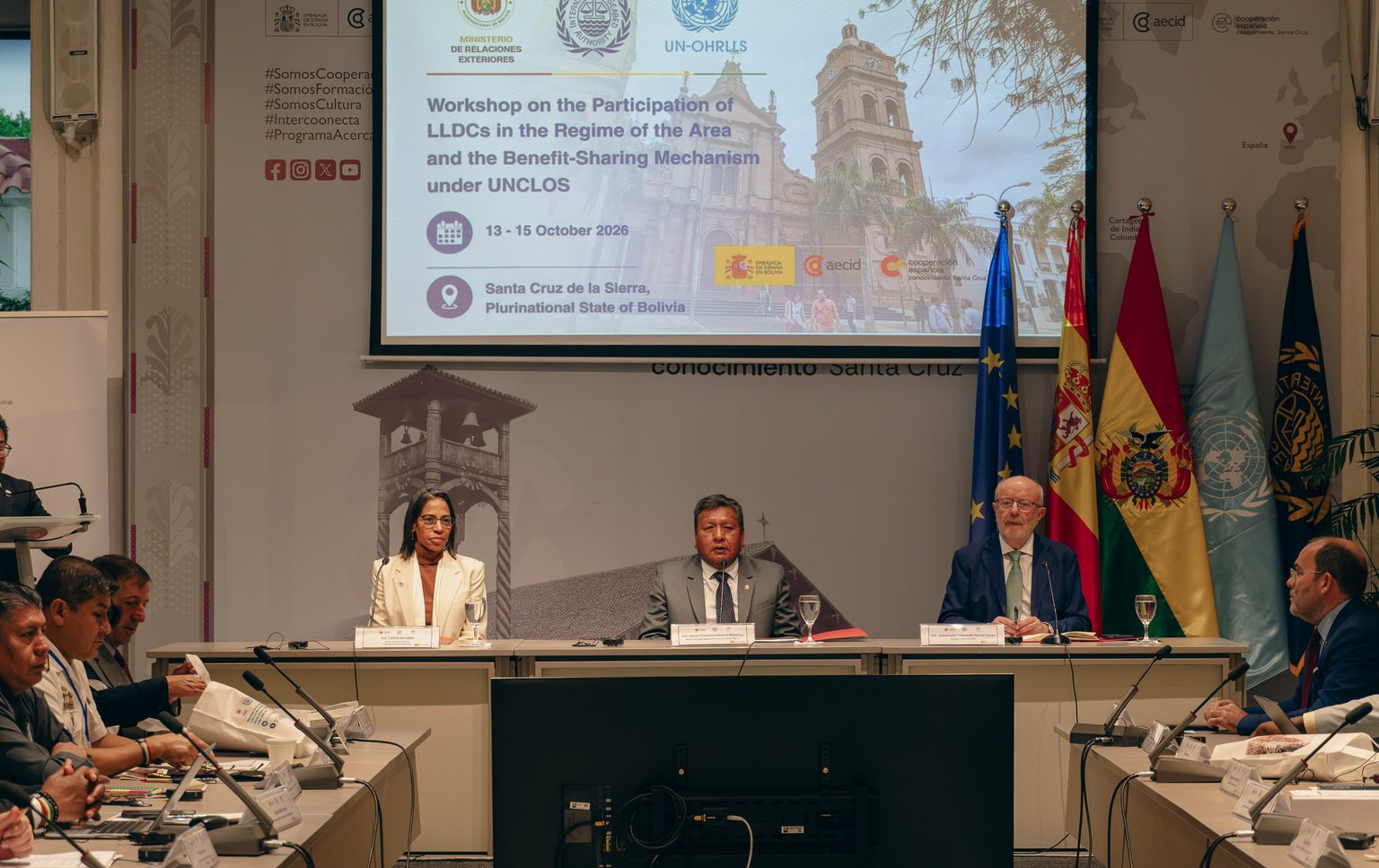
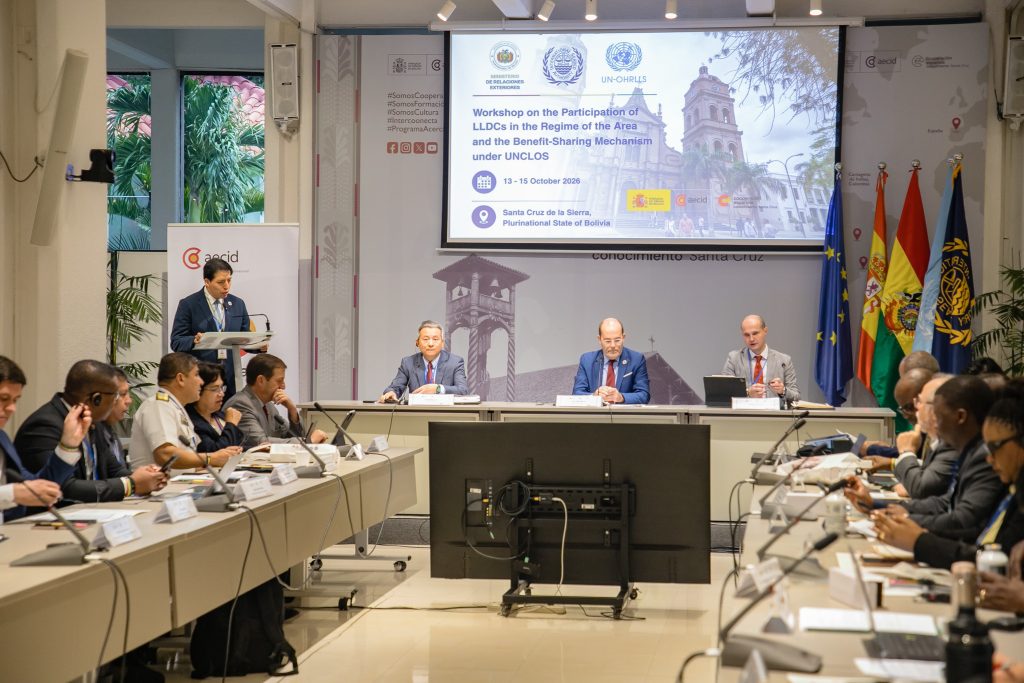
Santa Cruz de la Sierra, Bolivia (13 – 15 October 2026) – A workshop on the participation of Landlocked Developing Countries (LLDCs) in international seabed governance and the benefit-sharing mechanism under UNCLOS concluded on Thursday, 15 October, with the adoption of the Santa Cruz Roadmap.
The workshop, held in Santa Cruz de la Sierra from 13 to 15 October, was organized by the International Seabed Authority (ISA) in partnership with the Government of the Plurinational State of Bolivia in its capacity as Chair of the Group of Landlocked Developing Countries. The event was also supported by the United Nations Office of the High Representative for the Least Developed Countries, Landlocked Developing Countries and Small Island Developing States (UN-HORLLS).
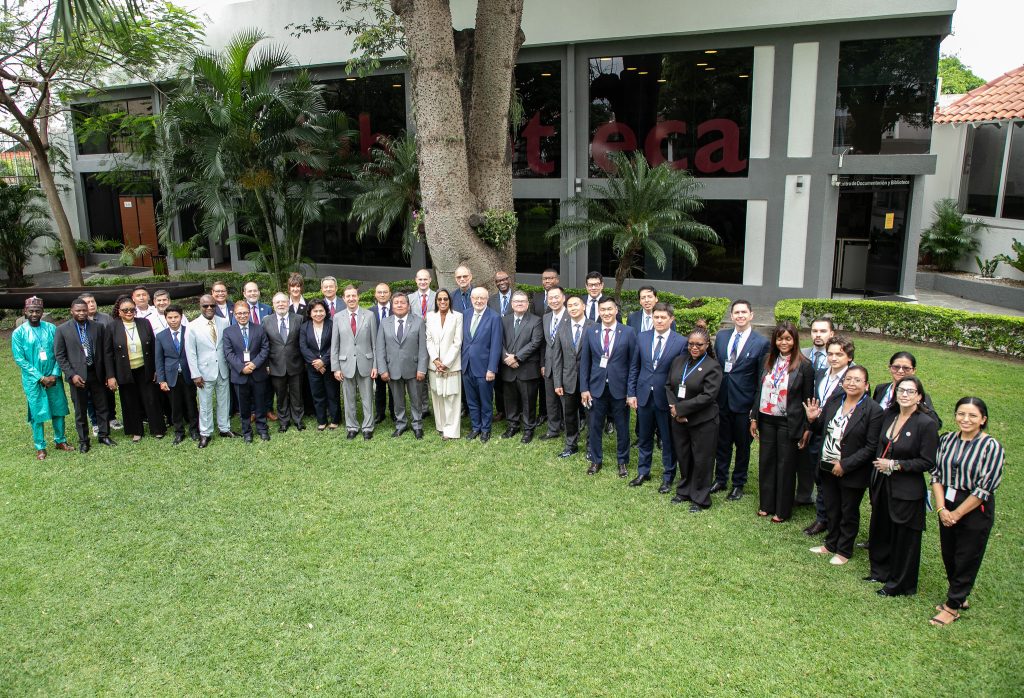
Representatives of 16 LLDCs attended the workshop, representing half of the 32 LLDCs globally, with the following regional distribution: nine countries from Africa (Botswana, Burkina Faso, Ethiopia, Malawi, Mali, Niger, Uganda, Zambia and Zimbabwe), five countries from Asia (Azerbaijan, Bhutan, Lao PDR, Mongolia and Nepal) and two from Latin America (Plurinational State of Bolivia and Paraguay).
The Santa Cruz Roadmap, adopted as the workshop outcome, reflects the priorities of participating LLDCs and identifies several action areas for ongoing engagement including:
- Encouraging each LLDC to appoint a national focal point to coordinate implementation of the Roadmap, ideally involving the country’s Permanent Representative in New York and a designated focal point in the capital;
- Establishing a more active LLDCs negotiating group to follow negotiations systematically, exchange information, analyse proposals and coordinate positions on issues of common interest;
- Organizing a regular ISA–LLDCs dialogue in connection with the Assembly and a follow-up meeting in New York, including a handover to the next LLDC Chair and presentation of the proposed programme of engagement for 2027;
- Advancing the discussion on the implementation of Article 82 of UNCLOS, including technical and legal workshops, analysis of potential revenues and benefit-sharing scenarios, and consideration of the relevant guidelines and institutional arrangements;
- Developing a longer-term programme to strengthen LLDC knowledge and capacities, including fellowships, internships, secondments, contractor training, scientific cooperation and preparation for countries that may wish to become sponsoring States;
- Strengthening cooperation among the ISA, UN-OHRLLS, Bolivia as Chair of the LLDC Group, and relevant thematic coordinators, including through collaboration with the International Think Tank for Landlocked Developing Countries (ITTLLDC), based in Ulaanbaatar, Mongolia.
 Developed through a process led by participating LLDC delegations, with support from ISA and UN-OHRLLS, the Santa Cruz Roadmap connects continued cooperation with the Awaza Programme of Action 2024–2034. Its proposals respond particularly to Awaza’s priorities on stronger scientific and technological capabilities and means of implementation.
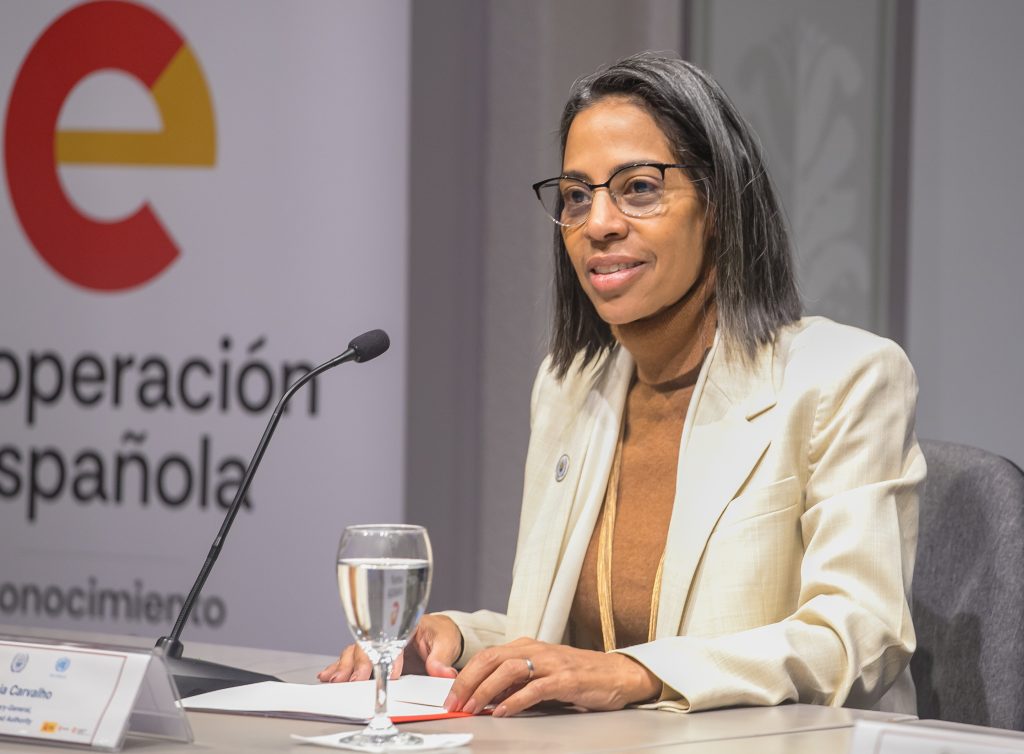
Madam Secretary-General of the International Seabed Authority, Leticia Carvalho, delivered her remarks during the opening of the workshop, stating:
“This workshop should not be an isolated encounter. It must serve as the starting point for a more structured and enduring collaboration between the Authority and the community of Landlocked Developing Countries. The decisions we reach today regarding the governance of the Area will have consequences for generations to come. Landlocked Developing Countries cannot merely be recipients of the outcomes; they must participate fully in their adoption. In practice, this is what the common heritage of humankind demands. Only through their full participation—with effective capacity and a voice of their own—can we move from principles to action, and from promise to a shared reality.”
 The Minister of Foreign Affairs of the Plurinational State of Bolivia, H.E. Mr. Héctor Huanca, highlighted that LLDCs went to Santa Cruz “to demonstrate that the rights recognized under international law can be transformed into real opportunities for our peoples.”
The Bolivian Minister also remarked: “This is the challenge that lies before us: to move from legal recognition to effective participation; from shared aspirations to mechanisms for cooperation; and from declarations of principles to the institutional, scientific, and technological capacities that will enable our States to engage in an informed and responsible manner in ocean governance. The International Seabed Authority plays a central role in this process. We value its willingness to foster dialogue with Landlocked Developing Countries, to strengthen understanding of the regime governing the Area, and to explore opportunities for collaboration that will allow for the expansion of our participation.”
The United Nations Under-Secretary-General and High Representative for the Least Developed Countries, Landlocked Developing Countries and Small Island Developing States, H.E. Ms. Rabab Fatima, emphasized: “We must connect these opportunities with the implementation of the Awaza Programme of Action. The programme’s emphasis on structural transformation and science, technology and innovation provides a foundation for building technical expertise and strengthening knowledge sharing.”
The Ambassador of Spain to the Plurinational State of Bolivia, H.E. Mr. Fernando García Casas, shared: “This common heritage of humankind must be truly common. All countries must have the opportunity to participate in its governance and benefit from the opportunities it yields. Equitable benefit-sharing must move forward. The landlocked developing countries have a legitimate stake in this debate and in the future of the Area. Having no coastline cannot mean being left out of the governance of the oceans and its benefits.” The Government of Spain supported the workshop through AECID and the Centro de Formación de la Cooperación Española in Santa Cruz de la Sierra.Delegations in Santa Cruz de la Sierra Delegations came from Permanent Missions and capitals, covering foreign affairs, mining, transport, maritime administration, environment and digital development.
The discussions drew on the legal, scientific and technical expertise of ISA and the Enterprise, contributions from UN-OHRLLS experts, and invited specialists in the law of the sea and benefit-sharing. Experts from the Government of the Russian Federation shared experience of the roles and responsibilities of sponsoring States and contractors in the Area. Zimbabwe, as Thematic Coordinator of the LLDC Group on Common Heritage of Humankind, presented on the links between the ISA regime and the Awaza Programme of Action.
For official documents and workshop presentations, check the workshop webpage here.
 About ISA
The International Seabed Authority is an autonomous intergovernmental organization established under the United Nations Convention on the Law of the Sea to organize, regulate and control activities in the seabed beyond national jurisdiction for the benefit of humankind as a whole. ISA is committed to ensuring that all activities in the deep seabed are carried out responsibly, using the best available scientific evidence and in accordance with the principle of the common heritage of humankind.
For media inquiries, please contact:
ISA Communications Unit, news@isa.org.jm