
Advancing women's empowerment in marine scientific research

Overview
The enhanced inclusion of women in marine scientific research forms the core of this voluntary commitment which ISA registered 2017 and renewed in 2022 as #OceanAction40786.
Science, technology and innovation are fundamental pillars for the eradication of poverty, economic and social development as well as the protection of the marine environment.
The critical role of women in contributing to such global goals is well established by now. However, despite the continuous and increasing efforts at a national and international level, opportunities for women in non-traditional and emerging sectors remain limited. This is particularly the case for areas like technology and science at large, where the participation of women from developing countries still faces many obstacles, including a culture of scientific research founded in seclusion and unsafe work environment.
As a result, according to the Global Ocean Science Report produced by IOC-UNESCO, women today account for only 38 per cent of the world’s researchers in ocean science, and the rate is even lower for women from developing countries. This constitutes a loss to ocean science as well as gender equality and women’s empowerment.
In line with its mandate under UNCLOS and the 1994 Agreement, ISA has a vision of women from developing States playing a pivotal role in marine scientific research.
This commitment is currently mainstreamed in all the programmatic documents of ISA, including the ISA Strategic Plan and High-Level Action Plan 2019-2023, the ISA MSR Action Plan in support of the United Nations Decade of Ocean Science for Sustainable Development and the Capacity Development Strategy, respectively adopted by the ISA Assembly in December 2020 and July 2022.
Through this voluntary commitment, ISA aims at giving priority to women from developing countries, and especially from LDCs, LLDCs and SIDS in marine scientific research, whenever possible.
Voluntary Commitment 1 contributes to the following SDGs:


Objectives and associated projects
Voluntary Commitment 1 has four thematic areas:
ISA aims to raise awareness amongst decision-makers about the importance of women’s empowerment and leadership in the context of the implementation of UNCLOS, particularly in relation to deep-sea research.
Due to multiple factors (cultural, religious, etc.), women, especially women from developing States, are facing particular difficulties in accessing senior positions and realizing their full potential as professionals. This is a loss for their country and the international community at large. It is also an impediment for developing States to fully benefit from the opportunities offered under Part XI of UNCLOS concerning mineral resources in the Area.
ISA strives to address these shortcomings at the highest level possible by influencing decision-making processes toward adopting and implementing proactive and positive measures that promote gender equality and empower women in deep-sea scientific research.
In 2020, ISA Secretary-General was recognized as a Gender Champion, joining a global network of female and male leaders and decision-makers determined to break down gender barriers and make gender equality a working reality in their spheres of influence.

Since its creation, training and capacity-building have been integral features of ISA’s activities. In accordance with its mandate under UNCLOS, it is ISA’s duty to ensure a variety of capacity-building and technology transfer mechanisms for its members, especially developing States.
Several initiatives have been implemented since the establishment of ISA in 1994 to achieve this, namely:
- The Endowment Fund for MSR
- The Contractor Training Programme
- ISA Internship Programme
- The Africa Deep Seabed Resources project
- The Abyssal Initiative for Blue Growth project.
ISA is committed to giving priority to women, especially women from the most vulnerable countries, such as the least developed countries, landlocked developing countries and small island developing States, whenever possible.
To achieve such goal, since its establishment in 1996, ISA has put in place several capacity-building initiatives which include, inter alia, the Contractor Training Programme, the Africa Deep Seabed Resources project, the Abyssal Initiative for Blue Growth project and the ISA Internship Programme.
As of May 2023, more than 100 women have benefited from the capacity development initiatives proposed by ISA.
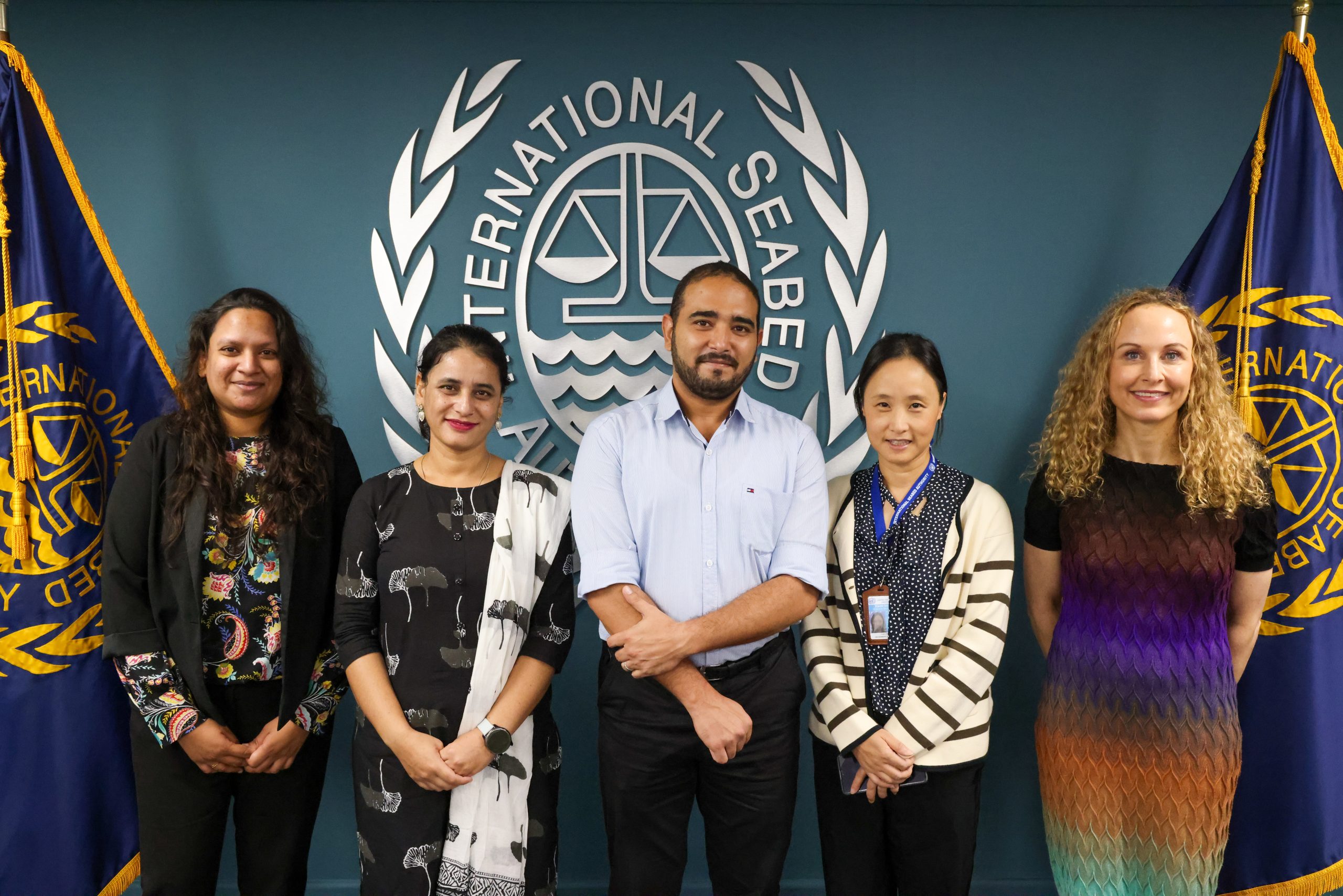
National experts deployed to ISA in 2024.
In February 2020, ISA organized the first-ever workshop on capacity development resources and needs assessment. The workshop was attended by various stakeholders, including ISA members, observers, contractors, NGOs, partners, the scientific community and former trainees. The workshop resulted in the adoption of an outcomes document, including recommendations to advance the commitment to empowering women scientists and ensuring leadership roles for women scientists from developing States as part of ISA’s mandate.
The Secretary-General took up this initiative and developed a report on a new programmatic approach for capacity development at ISA. The report was considered and adopted for implementation by the ISA Assembly in December 2020. It is now fully embedded in the ISA Action Plan for Marine Scientific Research in support of the UN Decade of Ocean Science, formally adopted by the ISA Assembly in December 2020.
Gender-sensitive training programmes
- Positive measures were put in place to ensure that all contractor training programmes are gender-sensitive, particularly regarding providing equal opportunities for scientific training.
- In 2019, the ISA Council required that all contractors put in place anti-sexual harassment policies on research vessels.
In 2018, ISA launched an important initiative in partnership with the Office of the High Representative for the Least Developed Countries, Landlocked Developing Countries and Small Island Developing States (UN-OHRLLS) to establish a platform where decision-makers of permanent missions in New York are made more aware of the challenges faced by women scientists from developing States.
Together with UN-OHRLLS and other partners, ISA will implement the Women in Deep-Sea Research project (WIDSR) to address the critical challenges faced by women scientists from developing States, particularly from SIDS, LDCs and LLDCs, in accessing opportunities for careers and leadership roles in deep-sea research as a way to contribute to strengthening the resource base of such countries in highly technical areas of knowledge.
The WIDSR project activities will focus on improving data availability on gender-specific barriers and solutions in deep-sea science and technology, policy support and awareness from leaders and decision-makers. In addition, it will foster capacity-building initiatives, strategic alliances and partnerships around establishing communities of practice, the twinning of institutions, mentorship and leadership programmes etc., and outreach and awareness activities.
Watch the recording of the 8 March 2021 webinar to find out more about the WIDSR project.
ISA aspires to stimulate a vigorous general debate to review ways and means to ensure the full and equal access of women from developing States to MSR and to promote their real participation in decision-making and leadership roles in deep-sea marine research.
ISA wants to showcase women’s accomplishments in deep-sea research and highlight the great opportunities available for women in professions related to ocean science. This is also part of ISA’s ongoing efforts to increase deep-sea literacy among the general public.
Meet women in MSR!
As part of its efforts to raise awareness, ISA has invited women who have benefited from its capacity-building programmes and activities to share their stories. More profiles will be added as we strive to inspire more women from developing States to enroll in ISA’s programmes and MSR.


